
Big Data Analytics Market: Global Trends, Growth, and Forecast
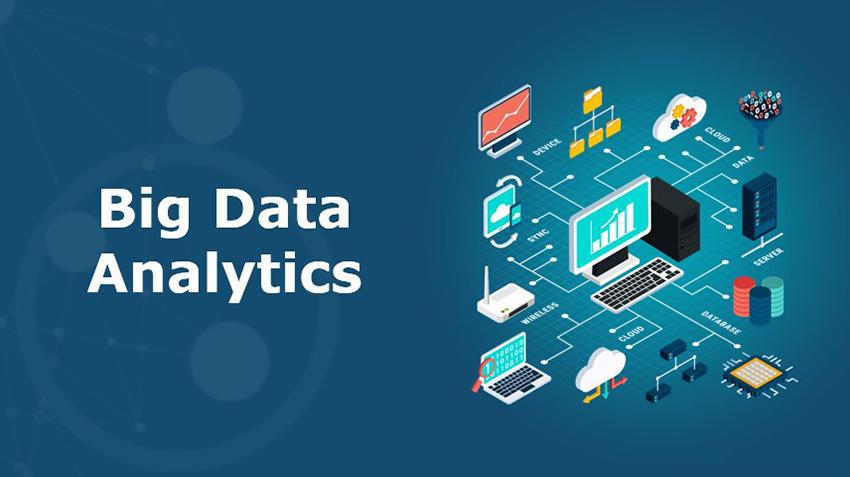
The explosion of digital information across industries has created unprecedented demand for sophisticated analytical solutions capable of extracting valuable insights from massive datasets. The Big Data Analytics Market Size continues expanding as organizations recognize the strategic importance of leveraging data assets for competitive advantage and operational excellence. Companies worldwide are investing heavily in analytics technologies that transform raw data into actionable intelligence driving business growth and innovation. The Big Data Analytics Market size is projected to grow USD 1162.93 Billion by 2035, exhibiting a CAGR of 13.6% during the forecast period 2025-2035. This remarkable growth trajectory underscores fundamental shifts in how organizations approach decision-making and strategic planning across all operational levels. Digital transformation initiatives across industries are accelerating adoption of analytics solutions that unlock hidden patterns and predictive capabilities within enterprise data. The proliferation of connected devices, social media, and digital transactions generates exponentially increasing data volumes requiring sophisticated analytical processing. Organizations benefit from improved decision accuracy, enhanced customer understanding, and operational optimization through effective big data analytics implementations.
Modern big data analytics encompasses comprehensive capabilities including data ingestion, processing, storage, visualization, and advanced analytical modeling across diverse data types. Distributed computing frameworks enable processing of massive datasets across clusters of servers, providing scalability previously unimaginable with traditional analytical approaches. Real-time streaming analytics allow organizations to analyze data as it arrives, enabling immediate response to emerging patterns and anomalies. Machine learning integration has dramatically enhanced analytical capabilities, enabling predictive modeling, pattern recognition, and automated insight generation at unprecedented scale. Cloud-based analytics platforms have democratized access to sophisticated capabilities, enabling organizations of all sizes to leverage enterprise-grade analytical tools. Data lake architectures provide flexible storage for structured and unstructured data, supporting diverse analytical workloads across organizational requirements. Natural language processing capabilities enable analysis of text data from customer feedback, social media, and documents extracting sentiment and meaning. Visualization tools transform complex analytical results into intuitive dashboards and reports accessible to business users across organizations.
Cost optimization and revenue enhancement remain primary drivers for big data analytics adoption as organizations seek measurable business value. Predictive maintenance analytics reduce equipment downtime and maintenance costs by anticipating failures before they occur in manufacturing environments. Customer analytics improve marketing effectiveness by identifying high-value segments, predicting churn, and personalizing engagement across touchpoints. Supply chain analytics optimize inventory levels, logistics routes, and supplier relationships reducing costs while improving service levels. Fraud detection analytics protect revenue by identifying suspicious patterns and transactions in real-time across financial operations. Pricing optimization analytics maximize revenue by determining optimal price points based on demand patterns and competitive dynamics. Operational analytics identify inefficiencies and improvement opportunities across business processes, driving productivity gains and cost reductions. Risk analytics enable better decision-making by quantifying uncertainties and potential outcomes across strategic and operational choices.
The future of big data analytics points toward increased automation, artificial intelligence integration, and democratized access transforming analytical practices fundamentally. Augmented analytics will automate insight generation, making sophisticated analytical capabilities accessible to business users without technical expertise. Edge analytics will process data closer to sources, enabling real-time insights for Internet of Things applications and distributed operations. Graph analytics will reveal complex relationships within connected data, supporting applications from fraud detection to recommendation systems effectively. Explainable artificial intelligence will address transparency requirements by providing understandable rationale for analytical predictions and recommendations. Data fabric architectures will unify access across distributed data sources, simplifying analytical workflows across complex enterprise environments. Quantum computing integration may eventually enable analytical capabilities impossible with classical computing for specific problem domains. Market evolution will continue as technology advancement and expanding use cases reshape big data analytics requirements and opportunities.
Top Trending Reports -
Germany Mobile Augmented Reality Market Segmentation

 English
 Arabic
 French
 Spanish
 Portuguese
 Deutsch
 Turkish
 Dutch
Dutch
 Italiano
 Russian
 Romaian
 Greek
Greek